Why Referees Wear a Different Kit
Why referees wear a different kit: learn how a distinct uniform marks the officiating role so players and spectators can quickly identify who is directing play.
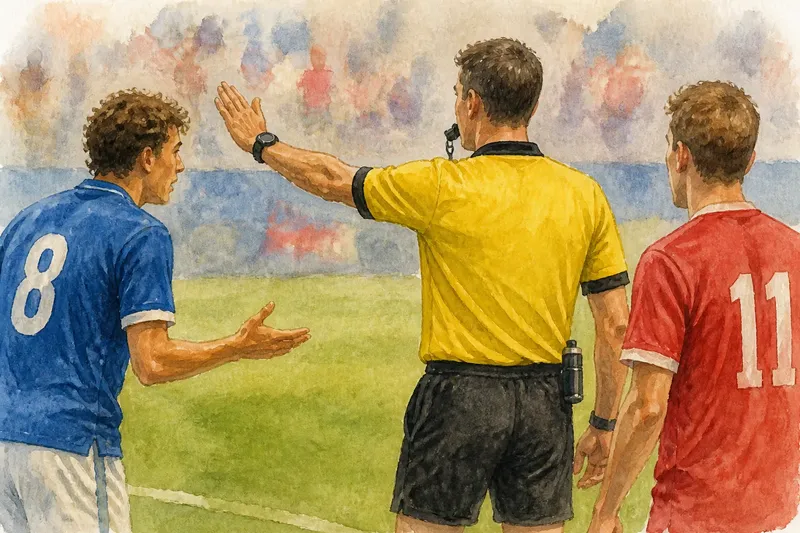
Why referees wear a different kit is easiest to see when a player looks up after a whistle: the official needs to be recognizable as someone outside either team. A referee uniform marks that separate role, making it clearer who is directing play and communicating decisions.
A referee uniform marks a separate role
On the field or court, most people belong to a team. Officials occupy a different position: they apply the rules and manage play without representing either side. Their clothing gives players and spectators a quick visual cue that the person wearing it is part of the officiating crew.
That cue matters when attention is on the ball, a boundary, or a player’s movement. A recognizable referee kit helps people locate the official and connect a whistle or signal to its source. It is not a decoration or a claim of authority by itself; it identifies the job the wearer is doing.
The kit identifies officials beyond the main referee
Depending on the sport, a match may include assistant referees, a fourth official, or other members of the officiating crew. A shared visual style helps viewers recognize that these people work together, even though their positions and responsibilities differ.
The identifying pieces should remain visible during play. A jacket worn over a referee shirt, for example, can obscure the crew’s shared appearance. Before a match, officials can check that their visible clothing follows the competition’s requirements and makes their role easy to read.
Why do referees wear a different color?
Why do referees wear a different kit from players?
The different kit distinguishes officials from the people competing. That makes it easier to tell who is applying the rules rather than playing for one of the sides.
Do all referees wear the same uniform?
Officials often share a recognizable style or color, but exact requirements depend on the sport and competition. The crew should follow the applicable rules while keeping its officiating identity clear.
Does the uniform affect a referee’s decision?
No; clothing identifies the official but does not determine whether a call is correct. Gestures, communication, and the rules convey the decision itself.
What should happen if an official’s clothing is confusing?
The organizer or referee should check the competition’s permitted options and choose a clearer official kit if one is available. The aim is to restore recognition of the officiating role, not to alter how the game is played.
How can organizers check the officiating kit?
A brief preparation check can catch clothing that hides the crew’s identity or conflicts with competition requirements. For each item, observe what is actually present and decide what to do next:
- Check whether the referee shirt is the designated official style; if it is, keep it, but if it is not, choose an approved shirt.
- Check whether a jacket or bib covers the identifying shirt; if the shirt remains visible, leave the layer in place, but if it is hidden, remove or replace the layer where rules allow.
- Check whether assistant officials have recognizable officiating clothing; if they do, keep the coordinated appearance, but if they do not, ask them to use an approved identifying option.
- Check whether the uniform’s badge or other required identifier can be seen; if it is visible, proceed, but if it is obscured, reposition the garment or use an allowed alternative.
- Check whether the proposed outfit follows the sport’s competition rules; if it does, use it, but if it does not, select a compliant option before play.
- Check whether warm-up clothing will remain on during the match; if it will not, set it aside, but if it will, confirm that it does not conceal required official clothing.
Say a community soccer organizer has a referee shirt, an approved alternate shirt, and a jacket that covers the badge. The organizer checks the competition rules, confirms the alternate shirt is permitted, and asks the referee to change into it and leave the jacket off during play. The result is a compliant outfit with the official’s identifying details visible; if the alternate shirt were not permitted, the organizer would instead ask the competition contact which approved option to use.
The uniform should make the official easy to identify
Why referees wear a different kit comes down to role recognition: the clothing helps players and spectators distinguish the people directing the match from those competing in it. A quick check of required identifiers, layers, and crew clothing can preserve that distinction without making the officials the focus of attention.
For a particular match, the relevant sport’s rules and competition requirements decide which uniforms are allowed. Checking those before play keeps the visual signal clear while respecting the standards officials are expected to follow.